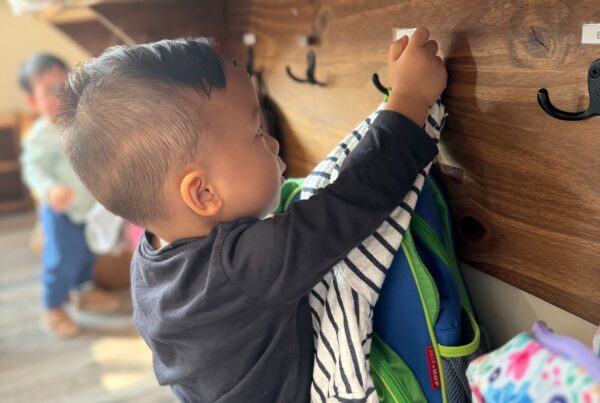
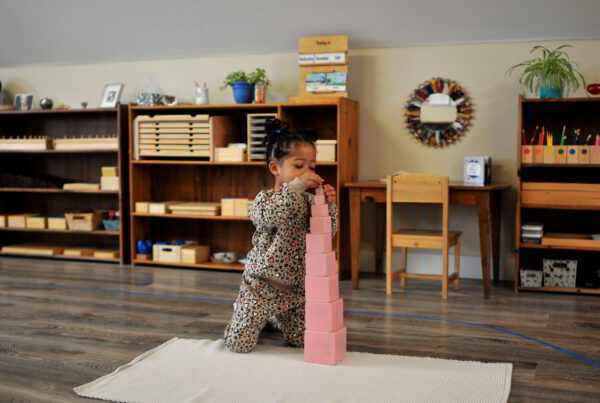
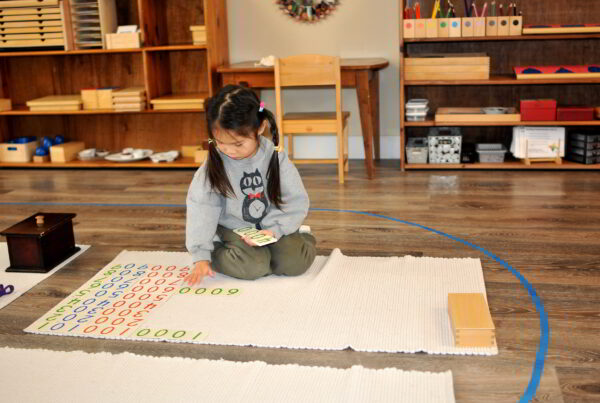
At YMS, movement is more than physical activity. It is a vital part of how children learn and grow. While traditional education has historically equated stillness with attention, modern neuroscience tells a different story. Learning does not happen separately from the body. Montessori classrooms reflect this understanding by encouraging intentional movement through self-directed work, material exploration, and shared outdoor experiences. These opportunities build coordination, engagement, and problem-solving skills that support higher-level learning.
Montessori philosophy recognized this connection long before it was widely accepted. Dr. Maria Montessori observed that children think best when they are actively engaged with their environment. As Montessori Parenting explains in Learning Through Movement, “Movement and cognition are deeply linked; children learn best when their bodies are actively engaged with the materials they are exploring.” By embedding movement into each exercise, Montessori classrooms support concentration, independence, and mastery in developmentally appropriate ways.
Current research continues to affirm these observations. Studies show that physical engagement stimulates neural pathways, enhances executive function, and supports memory and sustained attention. As highlighted in the Montessori Scientific Research article, The Role of Movement in Early Learning According to Montessori, movement-rich environments improved cognitive outcomes while also strengthening self-regulation. Rather than interrupting learning, movement helps organize the brain for more focused thinking.
Fun Fact: Both Google founders, Larry Page and Sergey Brin, attended Montessori schools as children. They credit their early Montessori experiences, with a focus on curiosity, independent learning, and problem-solving, for helping shape the creative thinking and self-motivation that later guided their success.
This understanding extends beyond education. Many modern workplaces, including innovative companies such as Google, design environments that encourage flexibility, movement, and collaboration. Employees are given choices in how and where they work because creativity and problem-solving improve when the body is free to move. These same principles apply to children, whose developing brains rely even more heavily on active engagement to support learning.
At YMS, we bring these principles to life every day. Our prepared environments invite students to engage directly with classroom materials and move with purpose throughout the space. Teachers observe carefully, offering guidance while allowing time for repetition and refinement. Through daily practice, children develop coordination, focus, and adaptability, skills that extend far beyond the classroom. By honouring the natural relationship between movement and learning, YMS supports children in becoming confident, capable learners whoa re prepared to think creatively, adapt thoughtfully, and engage meaningfully with the world around them.
Cover Photo: Through movement-rich work, YMS students develop focus, problem-solving skills, and independence while engaging directly with learning materials and peers.